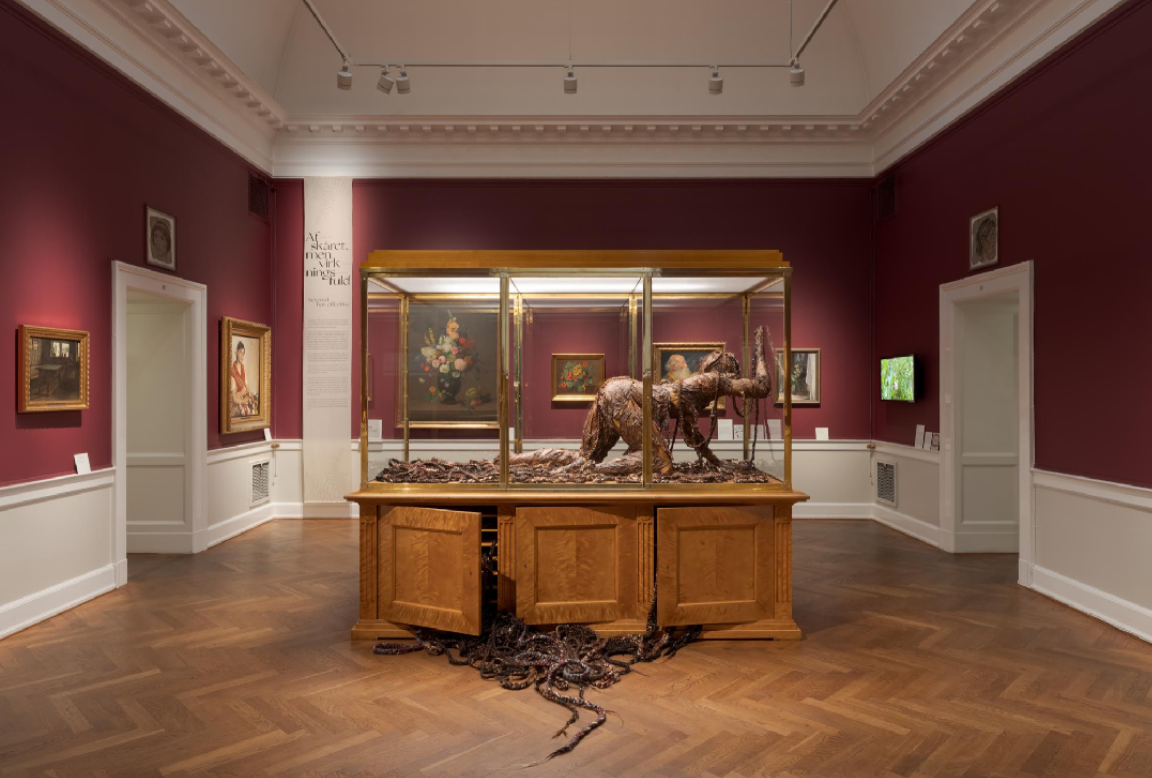
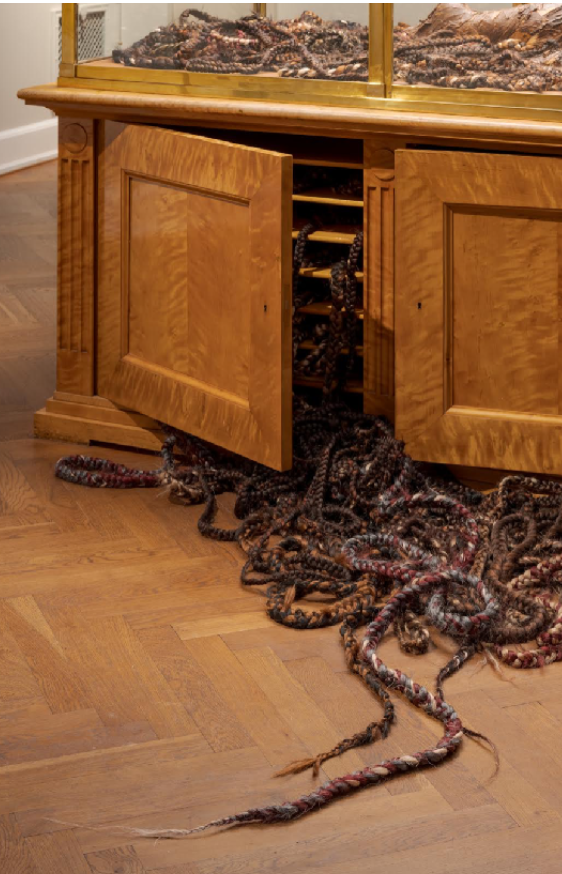
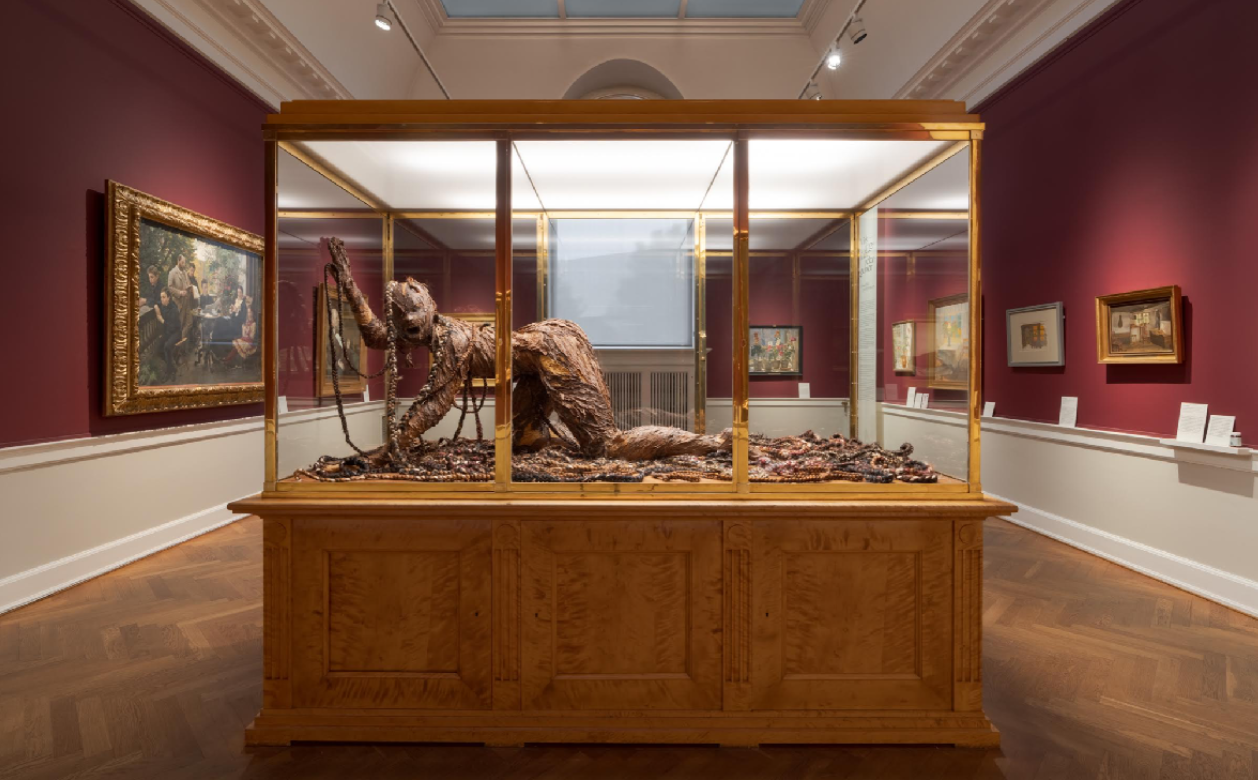
The installation Rootwork, commissioned by Hirschsprung, spans the entire museum and integrates its architecture both physically and conceptually. A sculpture based on a 3D rendering of Grace Jones is covered in tobacco leaves, referencing Joakim Skovgaard’s tobacco mosaic in the foyer. Braids emerge from the figure, breaking through the vitrine and extending into the space, challenging the colonial gaze embedded in exhibition practices.
The work connects to the Hirschsprung Collection’s origins in the tobacco trade and the broader theme of exotic plants in Danish upper-class homes, highlighting colonial histories that persist today. Drawing on archival research and encounters with tobacco farmers, the project traces how tobacco shifted from medicinal use to a harmful commodity through Western exploitation.
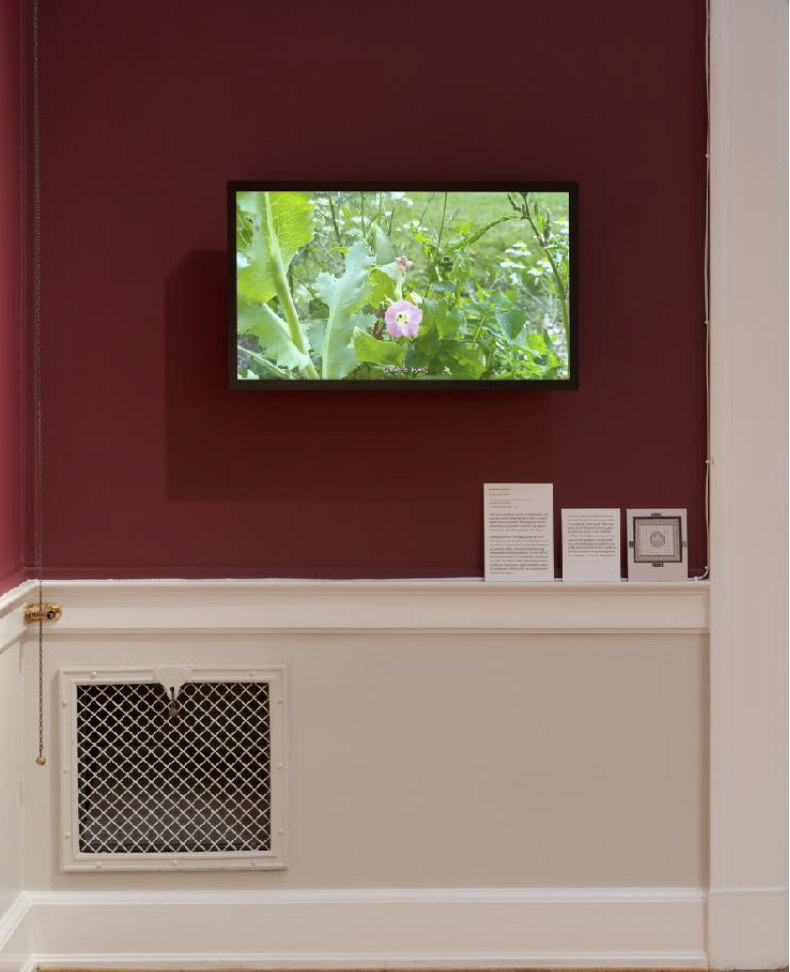
In a related video filmed in Roslev, Skive, Denmark, Ehlers participates in an indigenous Colombian ritual centered on tobacco as a healing plant.
Contrasting this with its destructive use in Western culture, the work reveals how colonial systems transform and overwrite indigenous knowledge—positioning colonialism itself as a kind of disease.
Rootwork (Sweat Lodge Ceremony), 2025
16:48 min (snippet)
Filmed at Natureland, founded by Sebas Kiej, Traditional Medicine Man and Dea Sofie Kudsk, Writer, MA in History and Culture and Language Contact Studies