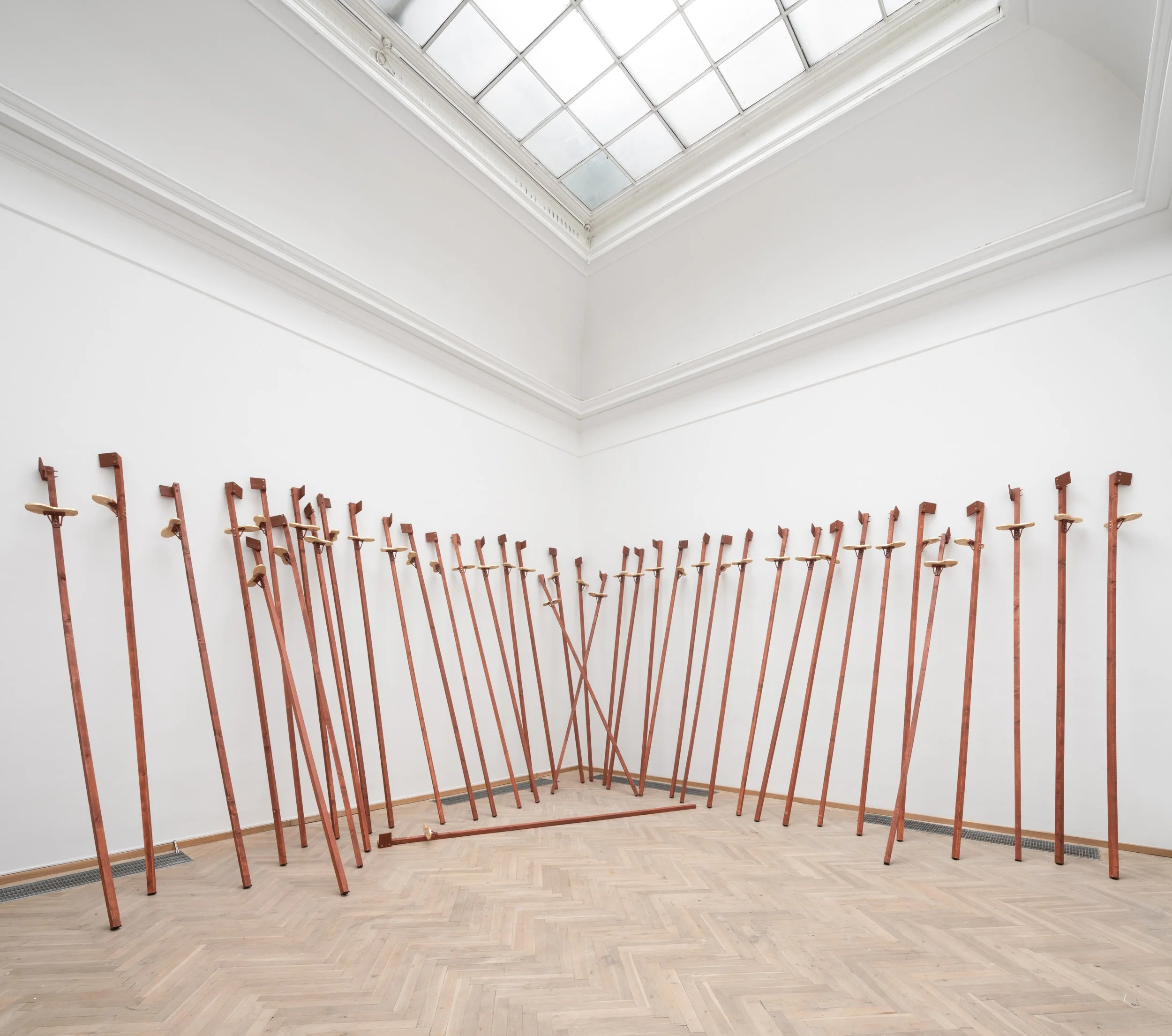
Jumbie Tree, the Flesh of Tree. The Flesh of Skin. Installation view, Kunsthal Charlottenborg, 2022. Photo by David Stjernholm.
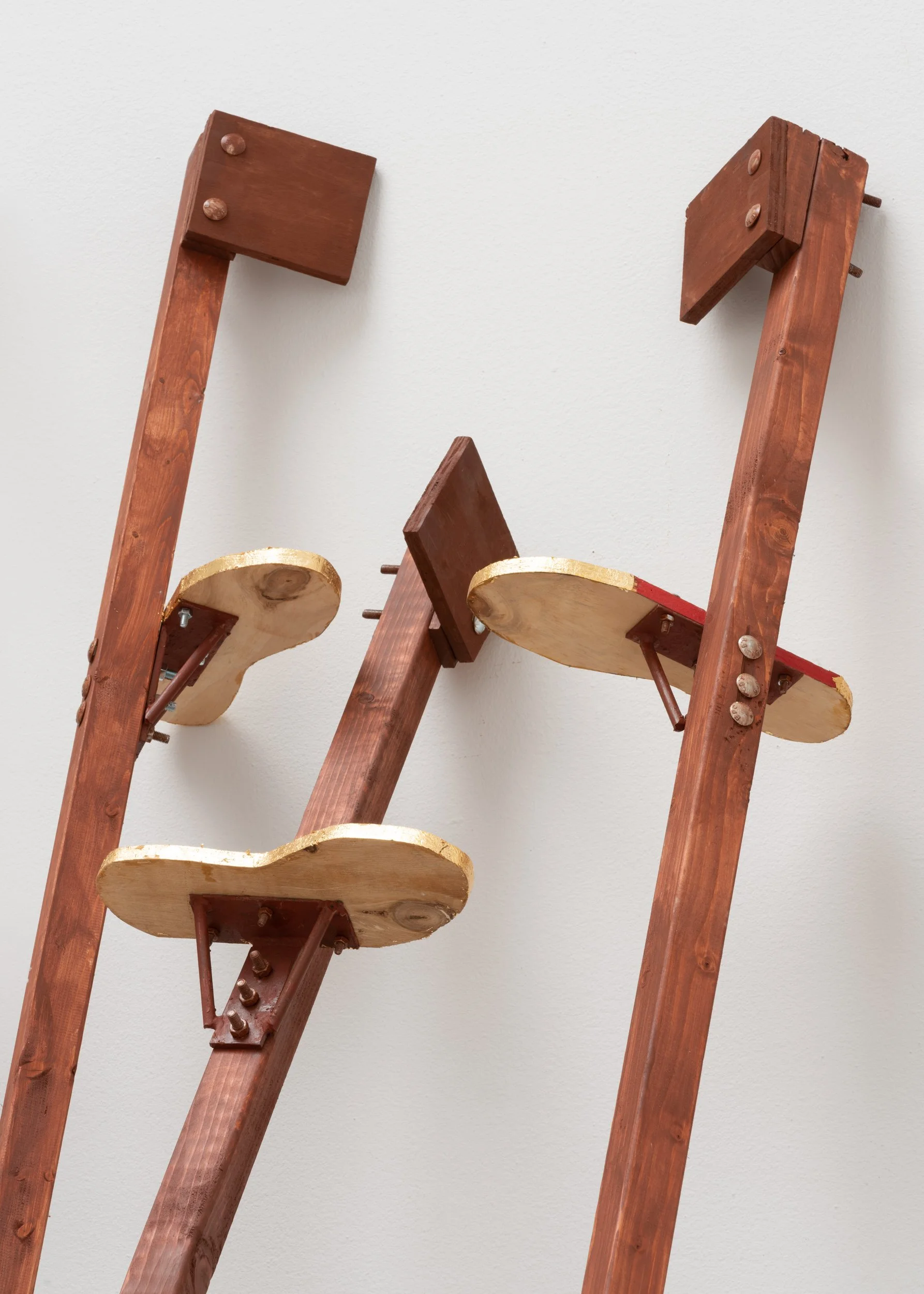
Jumbie Tree, the Flesh of Tree. The Flesh of Skin. Installation view, Kunsthal Charlottenborg, 2022. Photo by David Stjernholm.
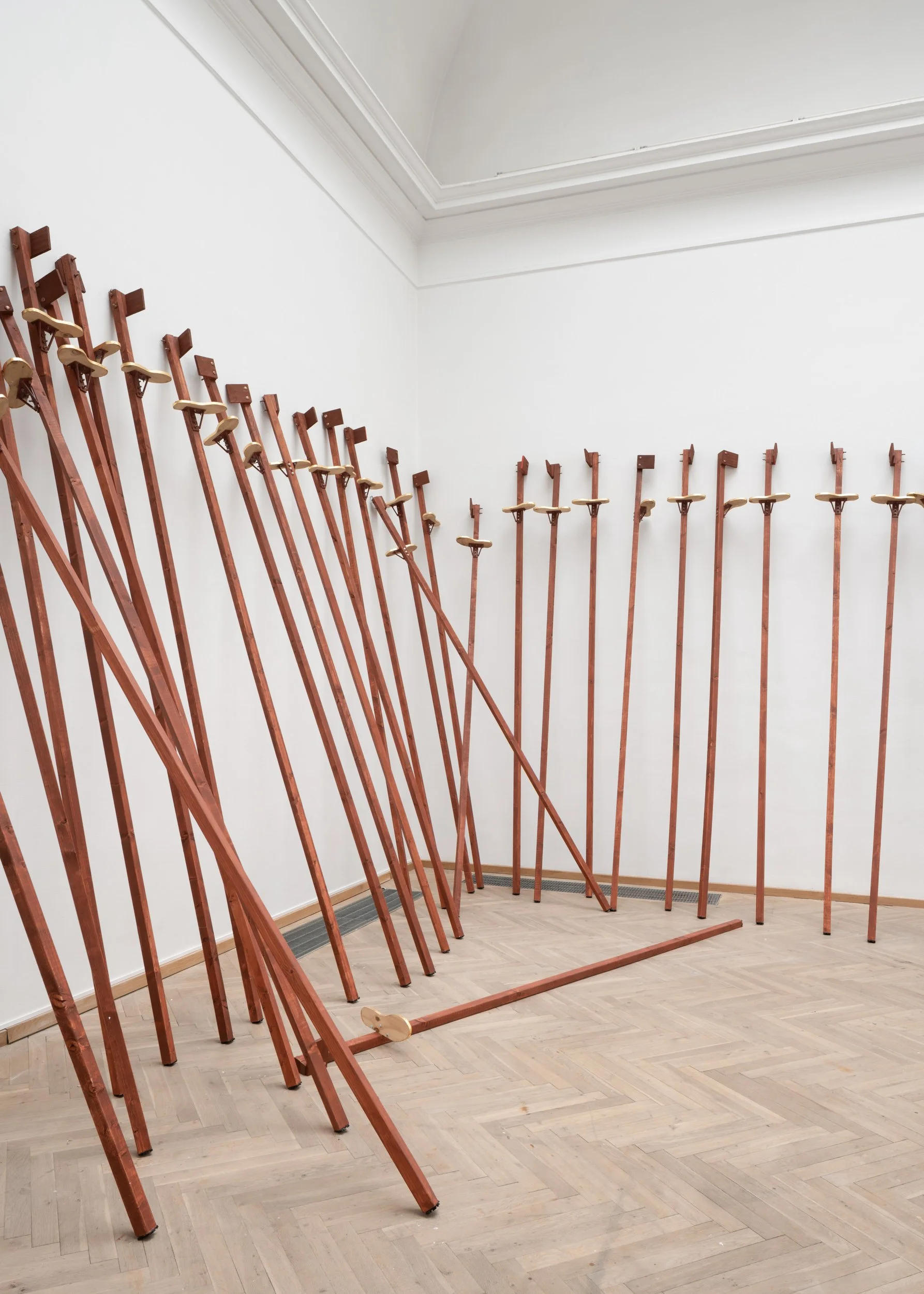
Jumbie Tree, the Flesh of Tree. The Flesh of Skin. Installation view, Kunsthal Charlottenborg, 2022. Photo by David Stjernholm.
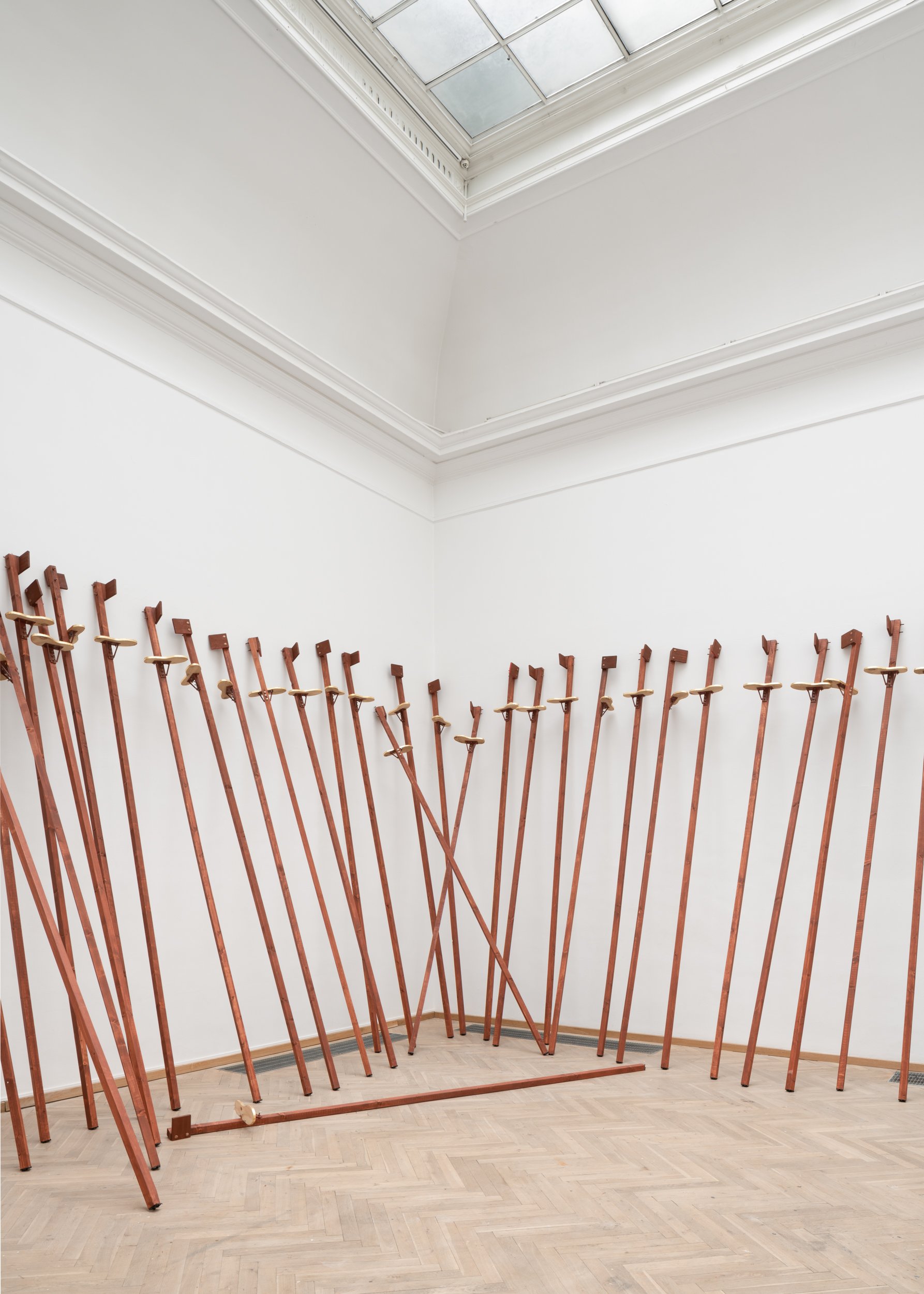
Jumbie Tree, the Flesh of Tree. The Flesh of Skin. Installation view, Kunsthal Charlottenborg, 2022. Photo by David Stjernholm.
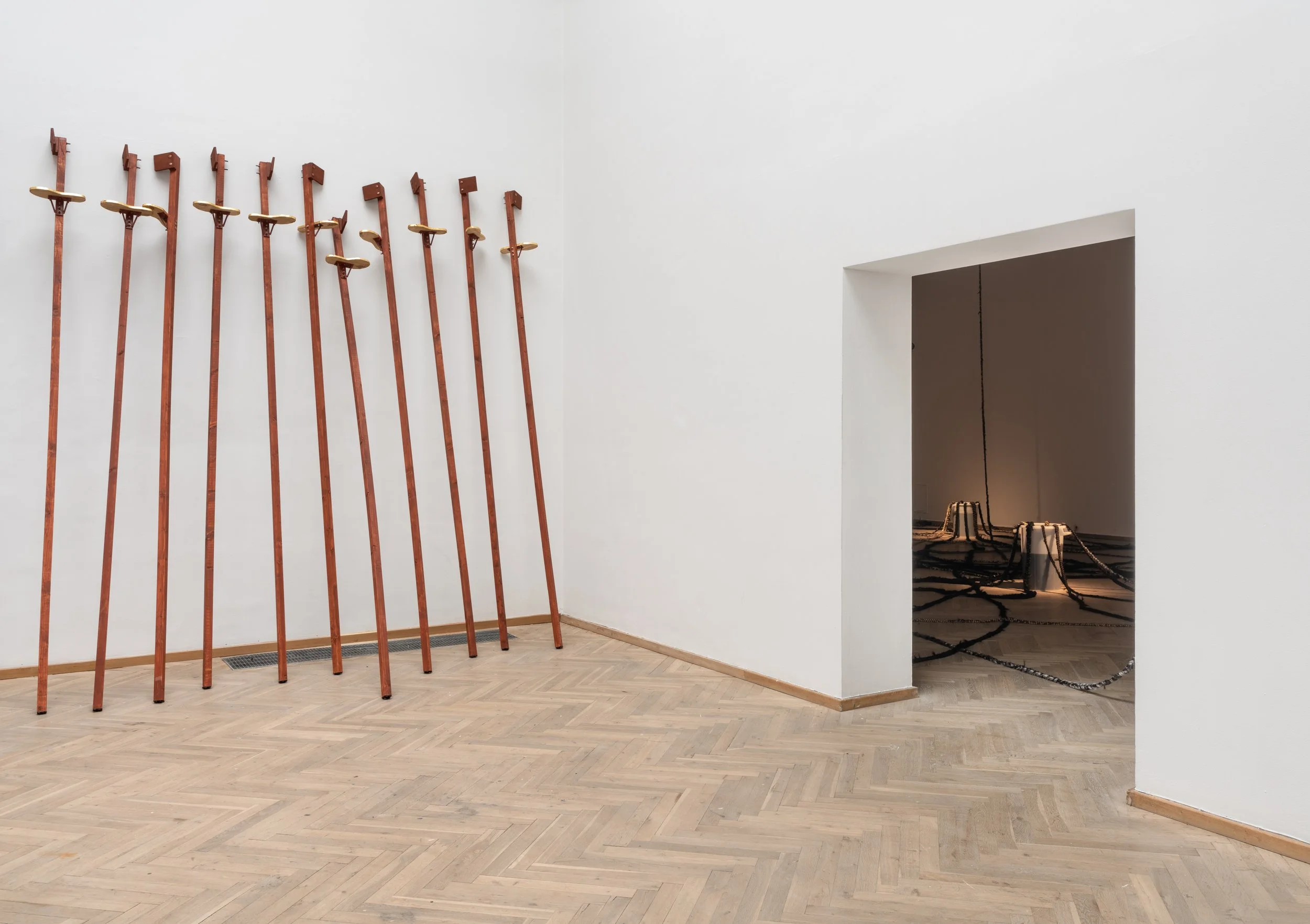
Jumbie Tree, the Flesh of Tree. The Flesh of Skin. Installation view, Kunsthal Charlottenborg, 2022. Photo by David Stjernholm.
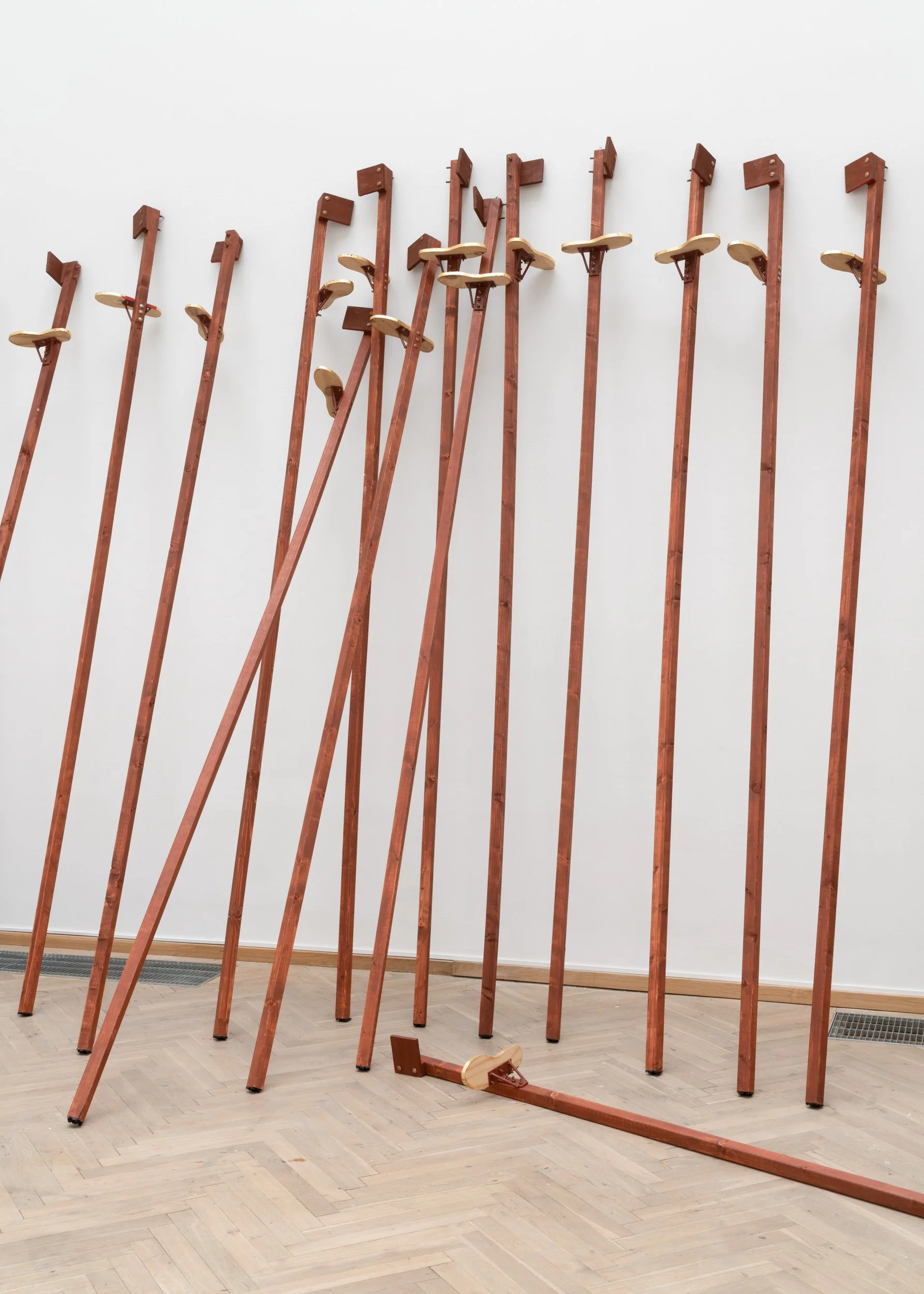
Jumbie Tree, the Flesh of Tree. The Flesh of Skin. Installation view, Kunsthal Charlottenborg, 2022. Photo by David Stjernholm.
Jumbie Tree, the Flesh of Tree. 2022.
The stilts are a reference to Caribbean stilt traditions and tales of the mythical figure, Moko Jumbie, from Afro-Caribbean folklore who, according to legend, crosses the Atlantic from West Africa to the Caribbean to look after his people. Moko means healer and Jumbie spirit, and in carnival tradition Moko Jumbie – the healing spirit – walks through the streets on stilts to protect the city from evil.
The Moko Jumbie figure always uses stilts and with his tall stature represents the supernatural. It is believed that this figure was inspired by Mandinka, Mende, and other groups in West Africa, where there is a tradition of using stilts in connection with religious celebrations. The installation was a hybrid project with elements from Trinidad, where Ehlers has roots.
The work was commissioned by Kunsthal Charlottenborg for the solo exhibition Archives In The Tongue: A Litany of Freedoms co-curated by Awa Konaté and Lotte Løvholm.