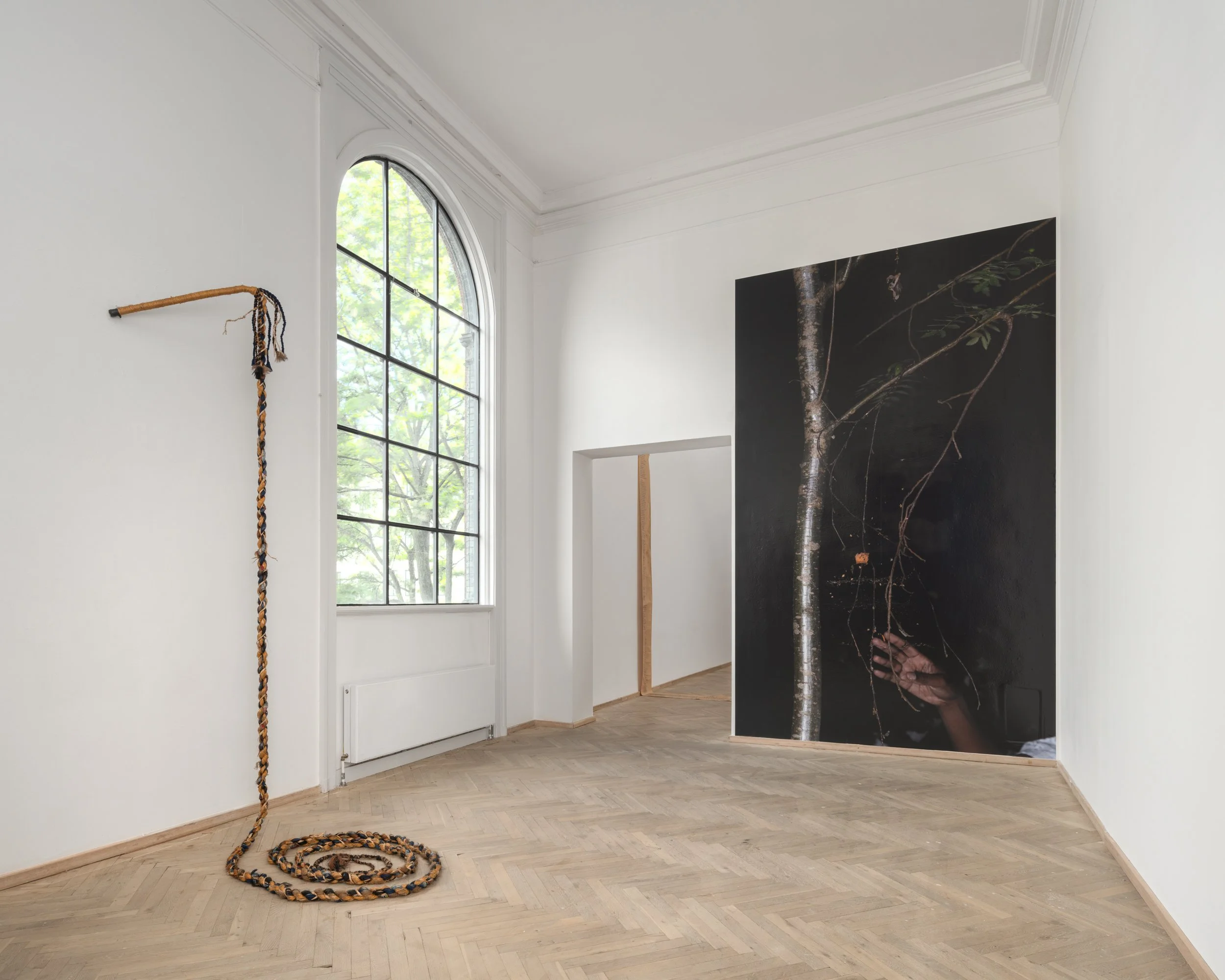
In The Time of Ongoing War, Can We Flee into Each Other?. Installation view, Kunsthal Charlottenborg, 2022. Photo by David Stjernholm.
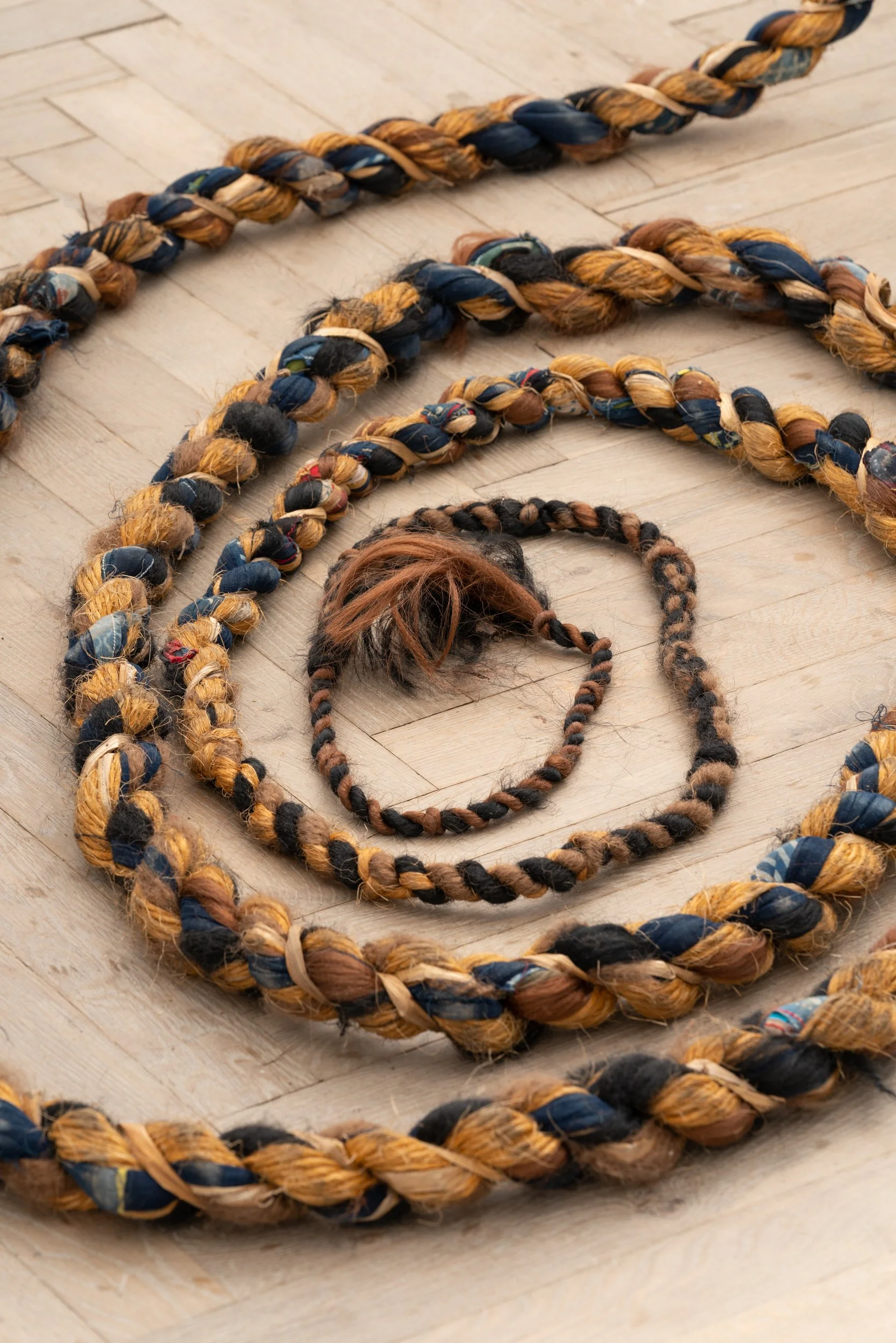
In The Time of Ongoing War, Can We Flee into Each Other?. Installation view, Kunsthal Charlottenborg, 2022. Photo by David Stjernholm.
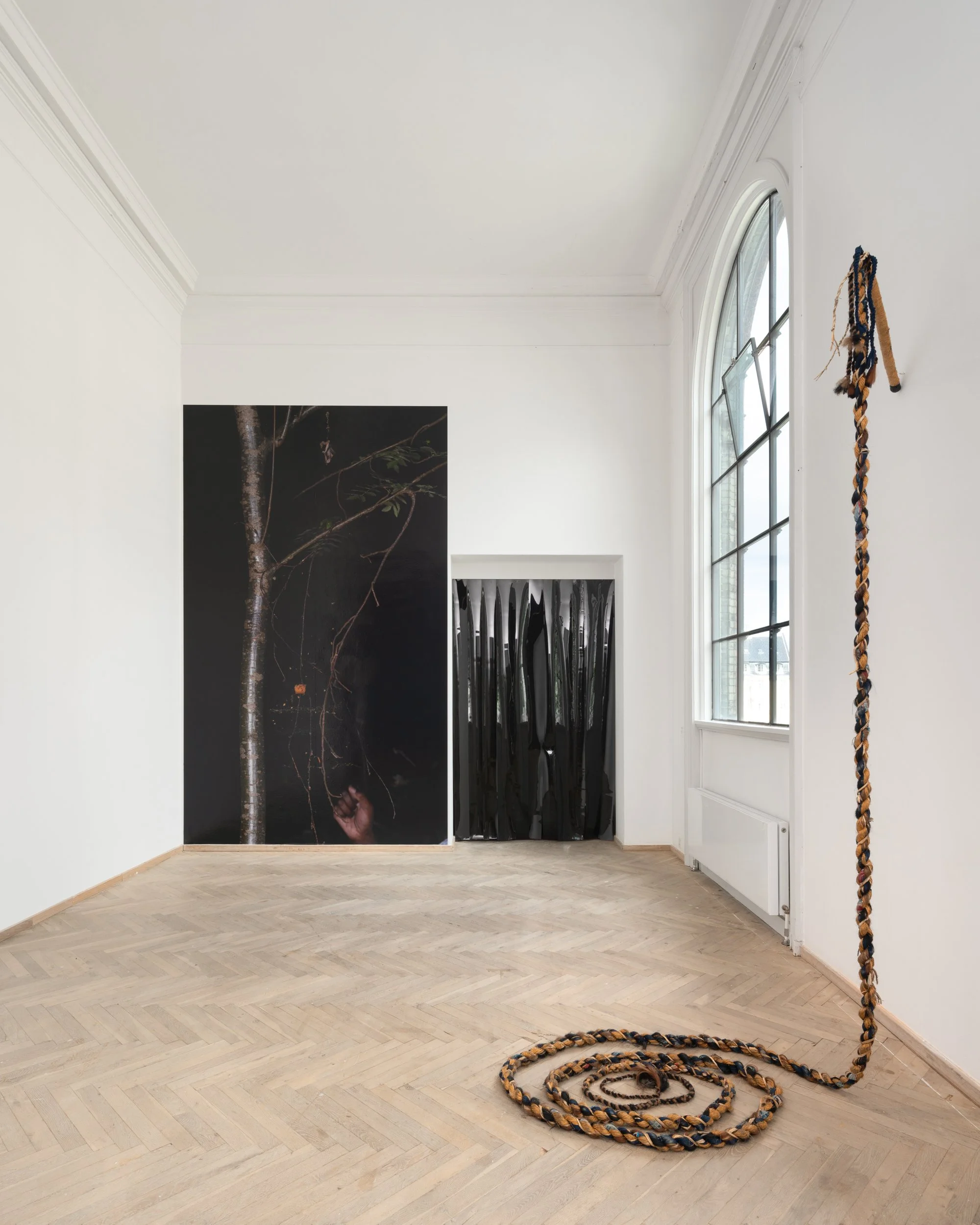
In The Time of Ongoing War, Can We Flee into Each Other?. Installation view, Kunsthal Charlottenborg, 2022. Photo by David Stjernholm.
In The Time of Ongoing War, Can We Flee into Each Other?, 2022.
The installation consists of two photostats from the same series and a whip made of rope, banana leaves, indigo fabric and synthetic hair hanging from the wall. The whip is a recurring motif in Ehlers’s practice: it represents the violence inherent in the colonial system but also holds a liberating potential. These dual ways of looking at the whip are similarly present in the carnival culture of the Caribbean, where performers within the jab jab tradition use whips as a tool for spiritual enlightenment. Such depictions of violence can be seen as a way of processing traumas dating back to colonial times. The whip was made in Trinidad in collaboration with whip master Ronald Alfred and designer Robert Young.
Showing a hand reaching for a tree and a clenched fist against the same background, the photographs on the wall are a reference to marronage. The term maron (maroon) was used about runaway and rebellious slaves in the Danish West Indies. Marronage means organised riot or resistance. The photographs represent life outside the plantation system, where the forest is a literal and symbolic sanctuary and the community a fundamental necessity. Then as now.
The work was commissioned by Kunsthal Charlottenborg for the solo exhibition Archives In The Tongue: A Litany of Freedoms co-curated by Awa Konaté and Lotte Løvholm.